Liquor License Costs in India: top 3 States Cost Analysis for 2026
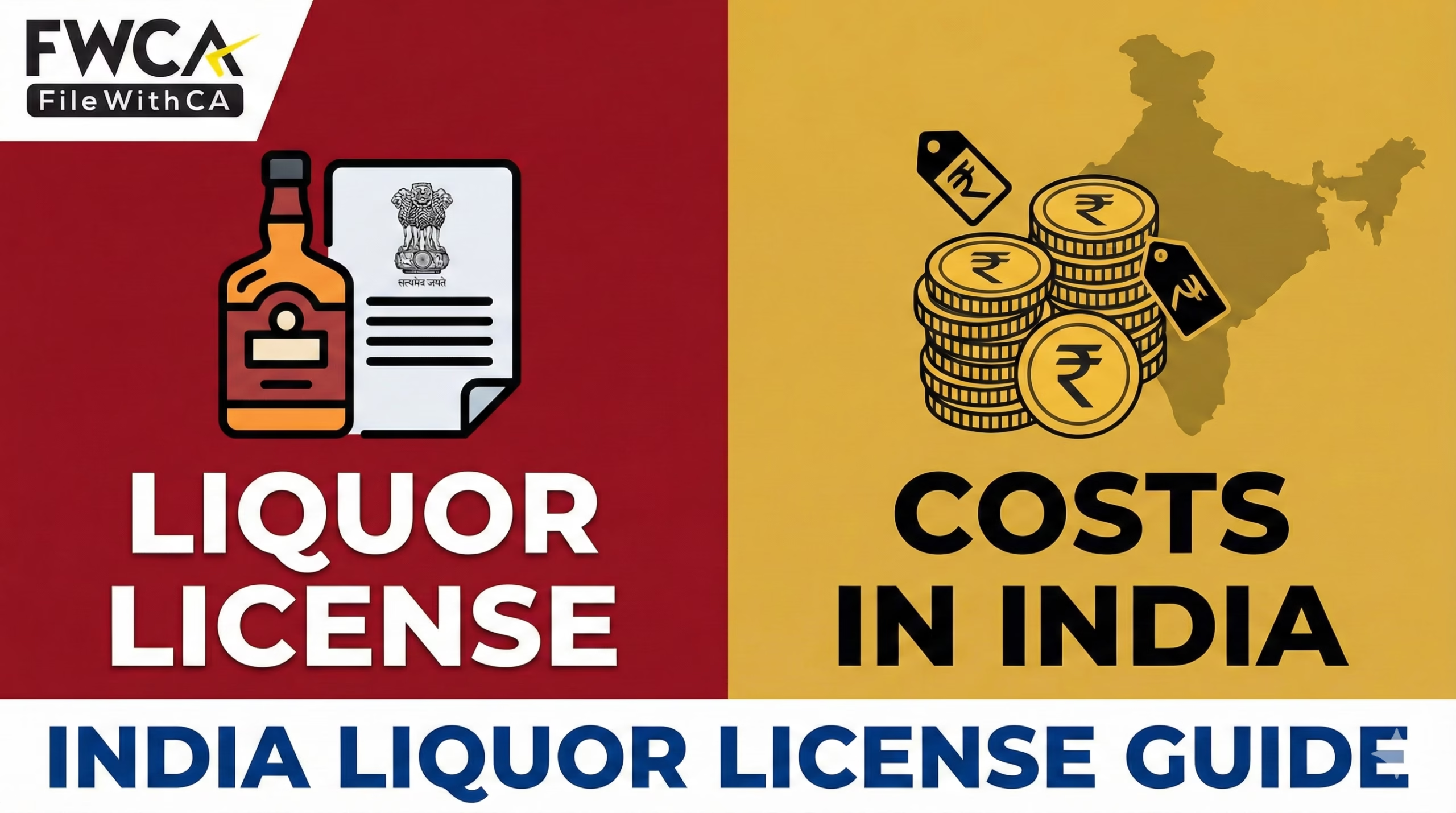
As we move into the 2026-27 Excise Cycle, several states have introduced “Ease of Doing Business” reforms, transitioning to e-lotteries and digitized portals like Nivesh Mitra (UP) or e-Abkari (Delhi). Below is a detailed financial and regulatory breakdown of liquor license costs in India for the current year.
Obtaining a liquor license is not just a fee-payment exercise; it is a rigorous “fit and proper” test of the applicant. In 2026, state governments have significantly hiked “Consideration Fees” to meet ambitious revenue targets, often exceeding ₹60,000 crore in states like Uttar Pradesh and Karnataka.
1. State-Wise License Fee Structure (Annual)
Contents
Fees vary based on the type of outlet (Retail vs. On-Premise) and the population density of the area. For 2026, most states have implemented a 5% to 10% annual escalation in license fees.
Uttar Pradesh (The e-Lottery Model)
UP has shifted almost entirely to an e-lottery system for retail shops.
- Model Shops: ~₹3,30,000 to ₹8,25,000 (depending on category: Model vs. Super Model).
- Processing Fee: ₹40,000 (Rural) to ₹65,000 (Major Cities like Noida/Lucknow).
- Composite Shops: ~₹75,000 to ₹90,000.
Maharashtra (The Tiered Population Model)
Maharashtra uses a population-based slab system for “Permit Rooms” (FL-III).
- Permit Rooms (Big Cities): ~₹5,44,000 to ₹8,00,000 per annum.
- Beer Shops: ~₹1,50,000.
- Wine Shops (FL-II): Can range from ₹5,00,000 to ₹20,00,000 depending on auction bids in high-demand zones like Mumbai/Pune.
Delhi (The HCR & Retail Model)
Delhi has revised its fees for the 2026 cycle with a standard 10% increase over the previous year.
- L-17 / L-18 (Restaurants/Bars): * Up to 50 Seats: ~₹7.84 Lakh (inclusive of Indian & Foreign Liquor).
- Above 200 Seats: ~₹36.09 Lakh.
- L-15 (Hotels): Ranges from ₹82,500 (small guest houses) to ₹6.60 Lakh (400+ rooms).
Karnataka (The e-Auction Powerhouse)
Karnataka began an aggressive e-auction in January 2026 for licenses valid until 2030.
- CL-2 (Retail) & CL-9 (Bar): Base prices for 5-year licenses are set between ₹70 Lakh to ₹90 Lakh, with successful bids often crossing ₹1.5 Crore in Bangalore.
2. Event-Based & Temporary Licenses (1-Day Permits)
For weddings, corporate events, or private parties, you must apply for a temporary permit. In 2026, these are almost exclusively issued via online portals to prevent last-minute bribery and delays.
| Event Type | Approximate Cost (Per Day) | Issuing Authority |
| Private Party (<100 people) | ₹10,000 – ₹12,000 | District Excise Office |
| Large Event (>100 people) | ₹15,000 – ₹25,000 | District Collector/Excise |
| Commercial/Music Festival | ₹50,000 – ₹1,00,000+ | State Excise Commissioner |
| Wedding (Home/Farmhouse) | ₹5,000 – ₹15,000 | Local Excise Inspector |
Audit Note: For corporate events, the GST paid on the license fee can often be claimed as an Input Tax Credit (ITC) if the event is for business promotion, provided the invoice is correctly addressed to the GST-registered entity.
3. The “Hidden” Costs: Security Deposits & MGQ
As a CA, I advise clients to budget for more than just the “License Fee.” The real financial weight lies here:
- Security Deposit: Often 10% to 25% of the total license fee, usually held in the form of a Fixed Deposit Receipt (FDR) or Bank Guarantee pledged to the District Excise Officer.
- Minimum Guaranteed Quantity (MGQ): This is the minimum amount of liquor you must lift from the wholesaler every month. If you fail to sell this amount, you still pay the duty on the shortfall.
- Application/Processing Fees: Non-refundable fees ranging from ₹5,000 to ₹1,00,000 just to enter the lottery or auction.
4. Compliance Checklist for 2026
To avoid rejection during the “Character Verification” phase, ensure these documents are ready:
- Personal: PAN, Aadhaar, and a Character Certificate (not older than 6 months).
- Financial: Solvency Certificate (often equal to the license fee) and ITRs for the last 3 years.
- Property: Registered Lease Deed or Ownership proof with an NOC from the owner specifically for liquor trade.
- Safety: Fire Department NOC and FSSAI License (mandatory for On-Premise serving).
Conclusion: A High-Stakes Investment
A liquor license is a lucrative asset, but in 2026, it is also a highly scrutinized one. With the Budget 2026 focus on digital transparency, “manual adjustments” are becoming impossible. My recommendation is to always perform a Pre-License Audit of your venue’s distance from schools and religious places (usually 100 meters) before committing to a lease.
- Demystifying GST Clarifications: Director Services and Cinema Food Taxes Explained | 2026
- The Ultimate Guide to GST-Exempt Services in India: Demystifying Notification 12/2017
- The Ultimate Guide to GST Reverse Charge Mechanism (RCM): Demystifying Notification 13/2017
- GST on Doctor-Director Remuneration: When Does RCM Apply?
- File Consumer Complaint Against Flipkart & Get Refund | Scam Safety in 2026
- Liquor License Costs in India: top 3 States Cost Analysis for 2026

INTEGRATED ACCOUNTING & BUSINESS SERVICES PRIVATE LIMITED
Leave a Reply