
The Ultimate Guide to GST Reverse Charge Mechanism (RCM): Demystifying Notification 13/2017
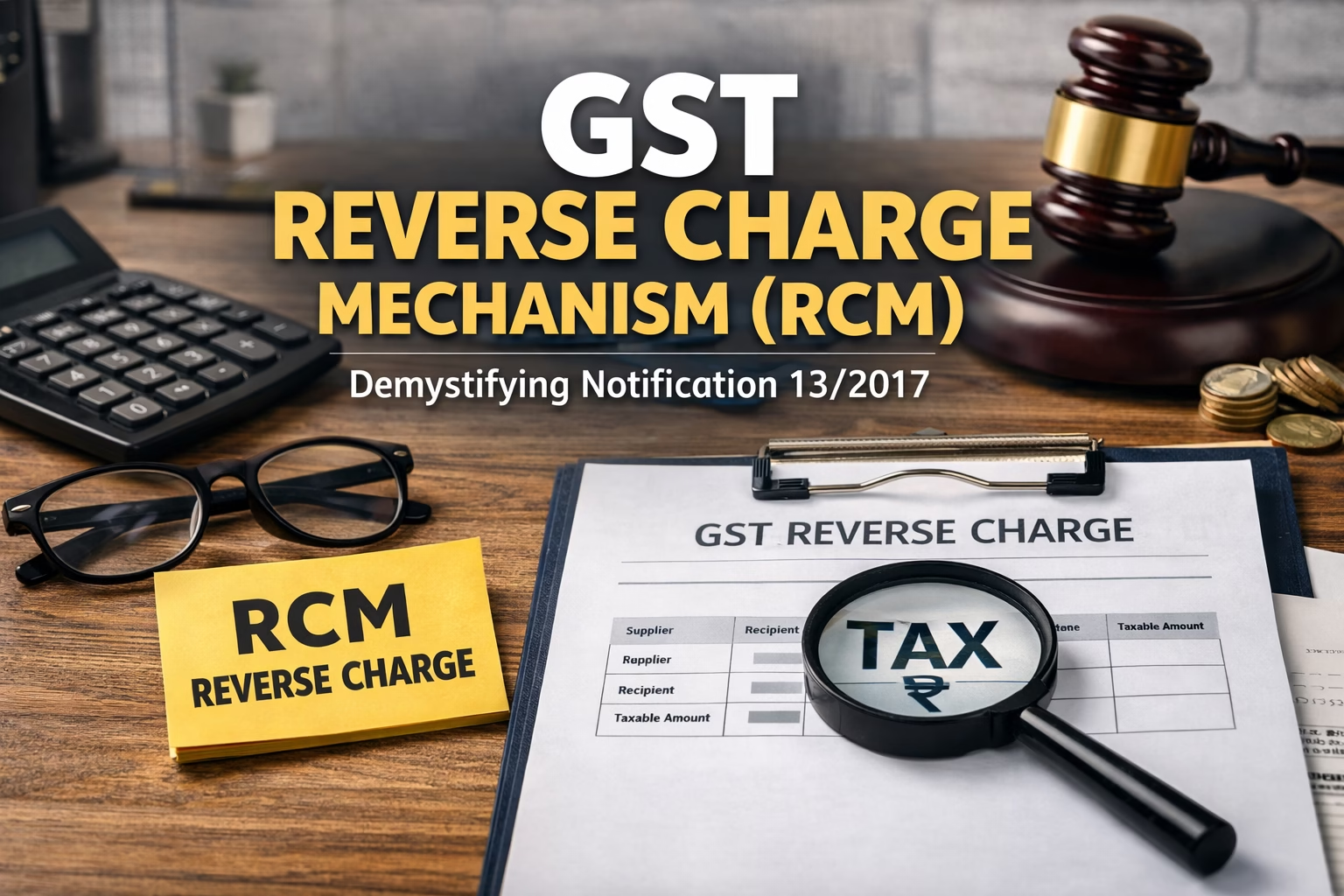
If you run a business in India, you are probably used to the standard way Goods and Services Tax (GST) works: the supplier provides a service, charges you GST, and pays it to the government. But what happens when the government flips the script?
Welcome to the Reverse Charge Mechanism (RCM).
To clear up the confusion around who pays what, the Government of India’s Ministry of Finance (Department of Revenue) released a highly specific set of rules known as Notification No. 13/2017- Central Tax (Rate). Issued on June 28, 2017, this document explicitly outlines the scenarios where the recipient of a service is legally obligated to pay the central tax directly to the government, rather than the supplier.
Let’s break down these rules—which officially came into force on July 1, 2017—so you can ensure your business remains perfectly compliant.
9 Key Services Covered Under Reverse Charge
Contents
The notification provides a detailed table categorizing exactly which supplies trigger RCM. If your business receives any of the following services, you are likely on the hook for calculating and paying the GST:
1. Goods Transport Agencies (GTA)
When a Goods Transport Agency transports goods by road, the tax burden falls on the recipient.
- This applies if the recipient is a registered factory, society, co-operative, body corporate, partnership firm, or casual taxable person.
- To make things crystal clear, the law states that whoever is liable to pay the freight charges is officially treated as the receiver of the service.
2. Legal & Arbitration Services
Legal billing can be complex, but the GST rule is straightforward.
- If an individual advocate, a senior advocate, or a firm of advocates provides legal or representational services to a business entity, that business entity must pay the tax.
- The same rule applies to services provided by an arbitral tribunal to a business entity.
- The specific litigant, applicant, or petitioner in the matter is legally treated as the person receiving the legal services.
3. Director Services
Corporate governance has its own tax implications.
- If a director supplies services to their company or body corporate, the company itself must pay the GST under reverse charge.
4. Government Services
While you might think paying the government is straightforward, RCM applies here too.
- If the Central Government, State Government, Union territory, or local authority supplies services to a business entity, the business entity pays the tax.
- However, there are exceptions; this RCM rule does not apply to the renting of immovable property, specific postal services (like speed post or life insurance), aircraft/vessel services, or the transport of goods and passengers.
5. Sponsorships
- If anyone provides sponsorship services to a body corporate or a partnership firm located in the taxable territory, the receiving corporate entity or firm is responsible for the GST.
6. Insurance & Recovery Agents
Financial institutions must closely monitor their agent networks.
- Services supplied by an insurance agent to a person carrying on an insurance business fall under RCM.
- Similarly, if a recovery agent provides services to a banking company, financial institution, or non-banking financial company (NBFC), the bank or institution pays the tax.
7. Copyrights & Creative Works
The creative industry also utilizes reverse charge to simplify tax collection.
- When an author, music composer, photographer, or artist transfers or permits the use of their copyright to a publisher, music company, or producer, the receiving company pays the GST.
Understanding these categories is just the first step. The notification also ensures that terms like “Body Corporate” carry the exact same legal weight as defined in the Companies Act, 2013. Furthermore, any expressions not explicitly defined in this notification take their meaning directly from the Central, Integrated, or State Goods and Services Tax Acts.
Staying compliant means knowing exactly when you transition from a simple consumer of a service to the entity legally responsible for its tax.
- Demystifying GST Clarifications: Director Services and Cinema Food Taxes Explained | 2026

- The Ultimate Guide to GST-Exempt Services in India: Demystifying Notification 12/2017
- The Ultimate Guide to GST Reverse Charge Mechanism (RCM): Demystifying Notification 13/2017
- GST on Doctor-Director Remuneration: When Does RCM Apply?
- File Consumer Complaint Against Flipkart & Get Refund | Scam Safety in 2026

- Liquor License Costs in India: top 3 States Cost Analysis for 2026


INTEGRATED ACCOUNTING & BUSINESS SERVICES PRIVATE LIMITED
Leave a Reply