
GST on Doctor-Director Remuneration: When Does RCM Apply?
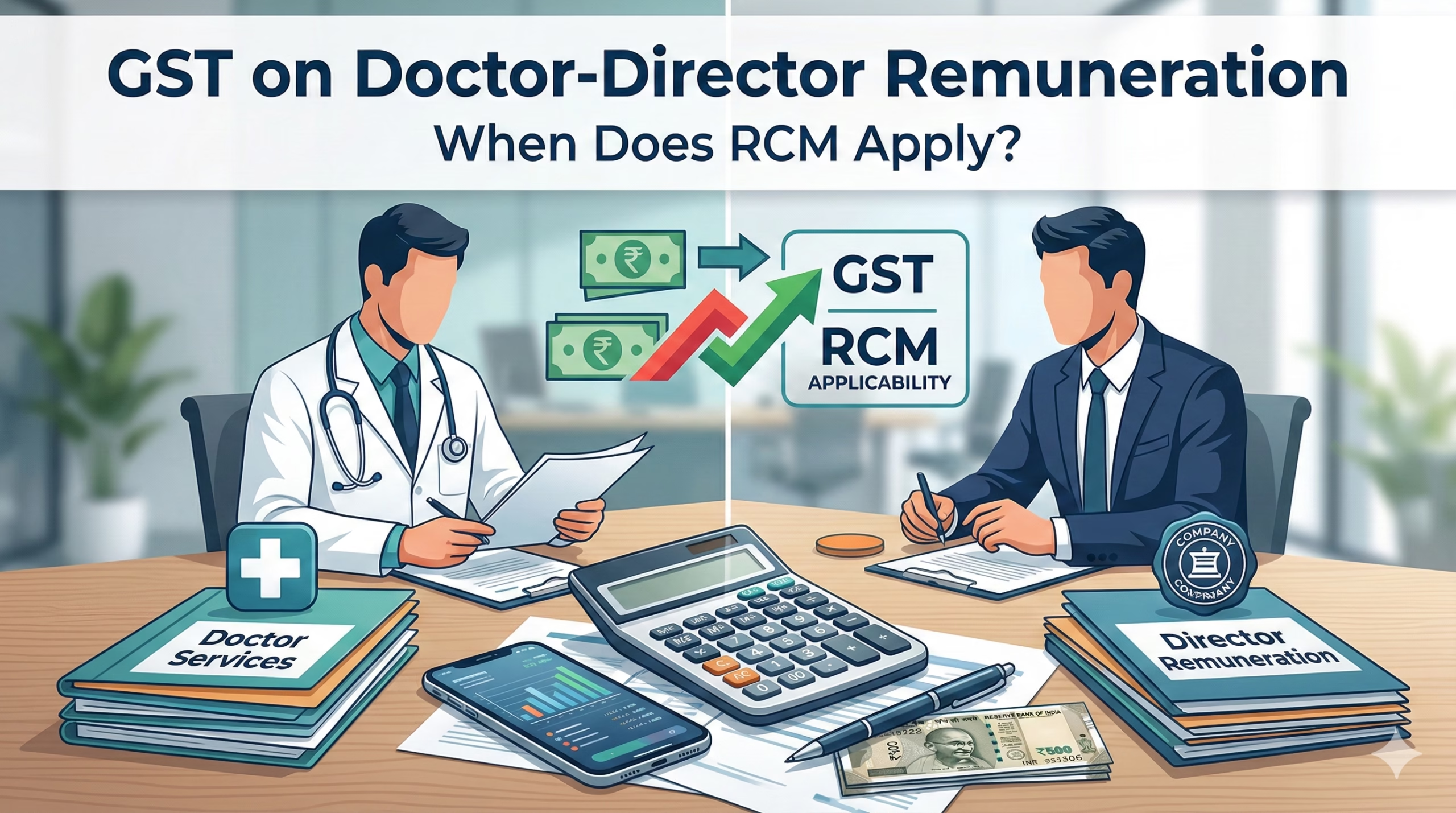
Hospitals often appoint senior, experienced doctors to their Board of Directors. But this dual role creates a common tax headache for accounting departments: Does the hospital need to pay Goods and Services Tax (GST) under the Reverse Charge Mechanism (RCM) on the remuneration paid to this doctor?
Let’s break down the rules, examine the legal provisions, and clarify exactly how to handle this compliance challenge.
The Source of the Confusion
Contents
The GST confusion stems from two competing rules in the tax code:
- The Director RCM Rule: Under Entry No. 6 of Notification No. 13/2017 (Central Tax), a company must pay tax under reverse charge for any services supplied by a director to the company.
- The Healthcare Exemption: On the flip side, Entry No. 74 of Notification No. 12/2017 strictly exempts healthcare services provided by an authorized medical practitioner or a clinical establishment from GST.
So, when a doctor-director receives a payout, which rule wins ?
The Determining Factor: “Capacity” of Service
The Central Board of Indirect Taxes and Customs (CBIC) cleared up this exact issue in Circular No. 201/13/2023-GST. The key to solving this puzzle is understanding the capacity in which the doctor is working. Merely holding the designation of a director does not automatically make every service they provide a “director service”.
Here is how the law views their roles:
- Professional Medical Capacity: When the doctor is treating patients, performing surgeries, providing consultations, or offering diagnoses, they are working purely as a medical professional. These services fall squarely under the definition of exempt healthcare services. Therefore, the remuneration paid for these specific medical services does not attract GST under RCM.
- Director Capacity: If the doctor receives separate payment for strategic management, board-level oversight, or attending meetings (such as sitting fees or commission), they are acting as a director. This specific type of remuneration will attract GST under RCM.
Additionally, if the doctor is acting formally as an employee of the hospital, Schedule III of the CGST Act states that services provided by an employee to an employer in the course of employment are not considered a supply.
Smart Accounting Practices for Hospitals
To avoid compliance issues and mitigate potential litigation, hospitals need to keep their books incredibly clean and distinct. Here is the suggested accounting treatment:
- Separate Your Ledgers: Do not club all payments to the doctor under a general “Director Remuneration” heading. Use distinct ledger heads like “Professional Medical Fees” or “Medical Practitioner Charges” for patient care, and separate accounts like “Director Sitting Fees RCM Applicable” for board duties.
- Use Clear Vouchers: Ensure your accounting vouchers explicitly state the nature of the payment. For example, use narrations like: “Medical services rendered as authorised medical practitioner exempt under Entry 74 of Notification 12/2017”.
- Align Your TDS: Make sure your Tax Deducted at Source (TDS) matches the actual service provided. Use Section 192 for standard salary payments or Section 194J for professional fees.
By strictly segregating these records, a hospital can build a strong, documentary defense proving exactly which services were professional and which were directorial.
The Final Verdict
In conclusion, hospitals are not liable to discharge GST under RCM on remuneration given to a doctor-director, provided that the payment is specifically for healthcare services rendered in their professional capacity.
- Demystifying GST Clarifications: Director Services and Cinema Food Taxes Explained | 2026

- The Ultimate Guide to GST-Exempt Services in India: Demystifying Notification 12/2017
- The Ultimate Guide to GST Reverse Charge Mechanism (RCM): Demystifying Notification 13/2017
- GST on Doctor-Director Remuneration: When Does RCM Apply?
- File Consumer Complaint Against Flipkart & Get Refund | Scam Safety in 2026

- Liquor License Costs in India: top 3 States Cost Analysis for 2026


INTEGRATED ACCOUNTING & BUSINESS SERVICES PRIVATE LIMITED
Leave a Reply